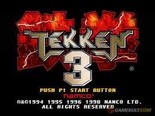
Tekken 3 (Arcade, 1997): The 3D Fighter That Redefined Speed, Style, and Depth
Introduction
When Tekken 3 landed in arcades in 1997, it didn’t just continue Namco’s 3D fighting series—it modernized it. Built on the PlayStation-derived Namco System 12 board, Tekken 3 delivered fluid animation, lightning-fast movement, true sidesteps, and a fresh generation of characters that would become franchise icons. It set a new benchmark for responsiveness in 3D fighters and ignited a global competitive scene that flourished in arcades and beyond.
Arcade Hardware and Release Context
- Developer/Publisher: Namco
- Arcade board: Namco System 12 (enhanced, PlayStation-based architecture)
- Arcade release: 1997
- Controls: 8-way lever + four attack buttons (Left Punch, Right Punch, Left Kick, Right Kick)
Tekken 3 arrived at a pivotal moment, when 3D fighters were defining themselves beyond early novelty. Where earlier entries felt “heavy,” Tekken 3 brought elastic movement, grounded jump arcs, and silky animations—achieving both higher skill expression and a more approachable feel.
What Made Tekken 3 Feel New
- True sidestepping: Tapping up or down to move into/out of the screen became a core defensive and offensive tool, allowing players to avoid linear strings and create new angles.
- Lower, grounded jump arcs: Jumps became tactical instead of get-out-of-jail moves, stabilizing footsies and wake-up play.
- Faster, smoother animation: Extensive motion capture and tighter frame timings made characters read clearly at speed.
- Juggle consistency: Improved airborne states enabled reliable air combos and deeper lab work without guessy variance.
- Defensive tech: Throw breaks, tech rolls, and movement defense (backdash, sidestep, sidewalk) enriched the meta; “chicken” countered parries/reversals, adding mind-game layers.
Roster: A New Generation Arrives
New faces who became pillars
- Jin Kazama: Protagonist with a hybrid Mishima/Kazama style—balanced tools and a high ceiling.
- Ling Xiaoyu: Highly mobile stance character with evasive movement and dance-like strings.
- Hwoarang: Taekwondo stance specialist; pressure-heavy with intricate kick transitions.
- Eddy Gordo: Capoeira flow—accessible rhythm for newcomers, tricky for veterans to read.
- Bryan Fury: Brawling menace with explosive counterhits and savage pressure.
- Julia Chang: Grappler-striker hybrid with strong pokes and combo carry.
- Mokujin: Adopts a random character’s moveset each round—pure matchup chaos.
Returning icons (often evolved)
- Heihachi Mishima, Paul Phoenix, Nina Williams, Yoshimitsu, Lei Wulong, King (successor), Gun Jack, Kuma/Panda (alts), and Forest Law standing in for Marshall.
Bosses
- Ogre and True Ogre: Ancient entity and final form—cinching the tournament’s lore thread.
Note: Some curiosities (like Gon and Dr. Bosconovitch) were PlayStation-only; the arcade roster kept the focus tight.
How It Plays: Systems in Harmony
- Four-button layout: Each limb maps to a button—intuitive for both fundamentals and advanced inputs.
- Movement and spacing: Backdash canceling creates space control and whiff traps; sidestep/sideturn reshape matchups, rewarding knowledge of string tracking and homing options.
- Offense: Jabs and mids establish plus frames and pressure; launchers/counterhit tools open juggles; with wall-less stages, carry and oki matter more than corner loops.
- Defense: Throw breaks demand quick reads; tech rolls mitigate okizeme but can be baited—vary wake-ups.
- Combo theory: Launcher → air hits (timed for height/axis) → ender for knockdown or oki. Character staples (King’s multi-throws, Paul’s big enders, Xiaoyu’s stance mix) define identity atop universal rules.
Stages and Presentation
- Aesthetic: Arcade-clean and readable; large or effectively infinite arenas keep neutral central.
- Music and sound: Energetic electronic tracks give each stage a pulse; clear hit sparks, counterhit cues, and KO stingers reinforce feedback.
- Performance: Silky framerate and crisp input response are Tekken 3’s secret weapon.
Story Snapshot
Fifteen years after Tekken 2, an ancient being—Ogre—hunts the world’s strongest fighters. Jun Kazama disappears after a mysterious encounter; her son, Jin, trains under Heihachi. The King of Iron Fist Tournament 3 lures Ogre. Jin defeats True Ogre, only to be betrayed by Heihachi—awakening the Devil Gene and escaping. It’s a pulpy, stylish backdrop for the roster’s generational shift.
Arcade Modes and Flow
- Arcade Battle: Climb through increasingly tough CPU opponents, culminating in Ogre/True Ogre.
- Versus: The arcade’s heart—rapid sets, character switches, instant improvement.
- Time Attack/Survival (operator-dependent): Quick-test formats focusing on execution, adaptation, and resource management.
Competitive DNA and Techniques
- Korean backdash (KBD): Clean backdash cancels to manipulate space and punish whiffs.
- Wave dash (Mishimas/stance users): Offensive movement to threaten 50/50s while closing distance.
- Electric-style inputs and just frames: High-execution attacks with superior frames/hit properties.
- Sidestep discipline: Learn what tracks and what fails; exploit weak sides in popular strings.
- Oki layering: Meaty mids vs. wake-up buttons/quick rise; delayed rises/side rolls add cyclical mind games.
Arcade-to-Home: What Changed and What Didn’t
- Arcade: Peak performance and pristine inputs; focused roster; competitive purity.
- PlayStation port: A technical miracle—lower poly counts and some visual compromises, but core gameplay intact. Added home-only characters and playful modes (Tekken Force, Tekken Ball) that boosted popularity without diluting the arcade meta.
The port’s excellence helped Tekken 3 become one of the best-selling, most beloved fighting games of the 1990s.
Tips to Level Up Fast
- Build a starter gameplan: Learn 3–5 safe pokes, one launcher, and a bread-and-butter juggle from common launch heights.
- Move with purpose: Practice backdash → block → whiff punish; drill sidestep to opponents’ weak sides.
- Respect frames without memorizing everything: If you’re minus big, back off or sidestep; if you’re plus, jab-check into mid/throw.
- Defend smarter: Recognize throw animations; specialize in one break first. Vary tech rolls to avoid predictable traps.
- Character chemistry: Pick a style that clicks; consistency beats tier-chasing in Tekken 3 arcades.
Legacy and Impact
- A new standard: Speed, animation quality, and sidestep-centric meta shaped 3D fighters for decades.
- Iconic cast: Jin, Xiaoyu, Hwoarang, Bryan, Julia, and Eddy became series anchors.
- Cultural footprint: Popularized capoeira in fighting games; arcades became training grounds for a generation.
- Enduring play: Clarity and pace keep it easy to pick up, hard to master.
Why Tekken 3 Endures
- Feel: Immediate, springy movement and clean inputs make rounds addictive.
- Clarity: Attacks read clearly; the game teaches through feedback, not text dumps.
- Depth: Neutral, juggles, oki, and character-specific sauce offer endless refinement.
- Character love: Diverse styles mean a perfect fit for every player personality.
Closing Thoughts
Tekken 3 is the moment 3D fighting “clicked.” It fused approachability with depth, style with substance, and speed with surgical precision. In the arcade, it was a phenomenon; in the canon of fighting games, it remains a touchstone—still studied, still celebrated, and still absurdly fun to play. If you want to understand why Tekken conquered the late ’90s, drop a coin in and sidestep into range—Tekken 3 will do the rest.


Comments
No additional comments.